
Olivia Boeberitz is a Cal Poly Humboldt Fisheries graduate student who is partnered with and supported by the Blue Lake Rancheria (BLR) Tribal Environmental Protection Agency (TEPA) through the North Coast Tribal Fisheries Collaborative, a partnership between Tribal, university, state, and federal personnel. Olivia’s research aims to reveal the seasonal presence, habitat use, and movement patterns of green sturgeon from populations within Humboldt Bay (Wigi), the Mad River (Baduwa’t), and the Eel River (Wiya’t). There are two genetically distinct population segments (DPS) of green sturgeon that are recognized: a southern DPS listed as “threatened” under the Endangered Species Act, and a northern DPS considered of “conservation concern.” Green sturgeon are the most marine-oriented of the sturgeon species, spending the majority of their long lives in the ocean. In the summer to fall months, green sturgeon from both DPS are known to aggregate in bays and large estuaries along the West Coast. Although, little is known about their seasonal presence, habitat use, and spatial distribution here in Humboldt County, California. The Humboldt Bay is home to both of these distinct population segments, making it a vital research area for the study of these fish.
Green sturgeon are central to the food security of coastal California Native American Tribes, and serve as a vital part of their cultural heritage and traditions. They are a long-lived species of fish, carrying life spans of 60-70 years. Like salmon, green sturgeon are anadromous, living in both fresh and salt waters. Unlike salmon, green sturgeon may return to their natal rivers every three to five years during their long lives to spawn. They are a truly ancient species of fish still around today, with populations that have persisted in North America for 200 million years.
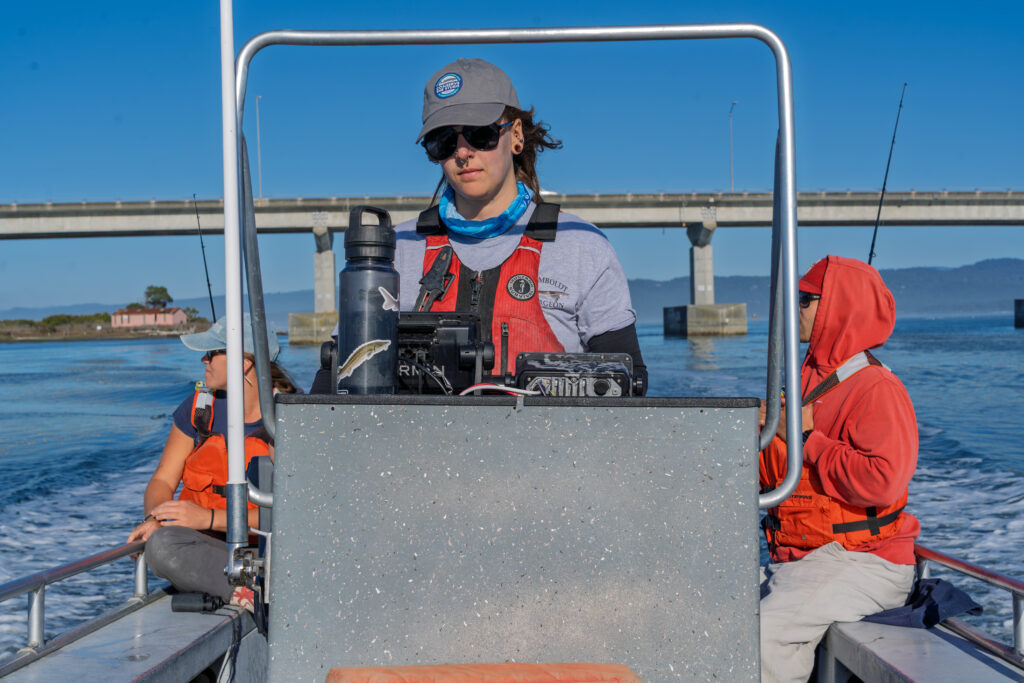
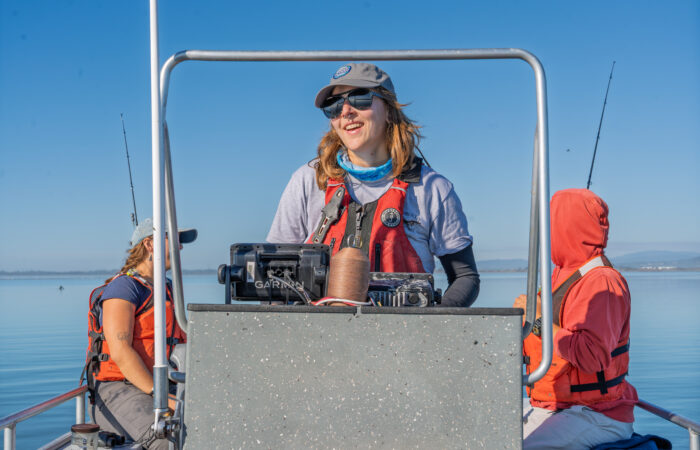
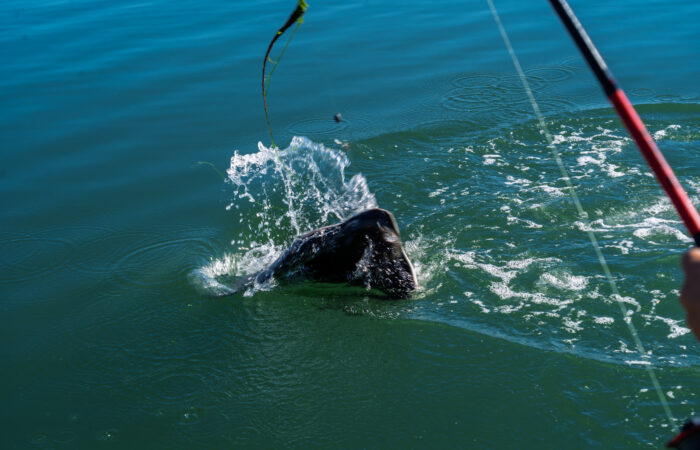
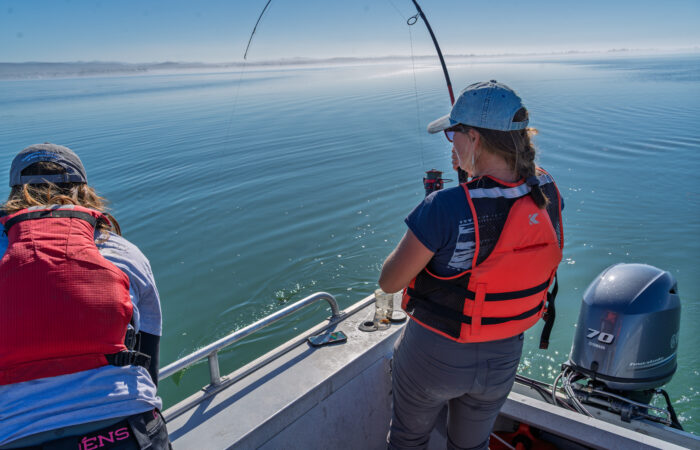
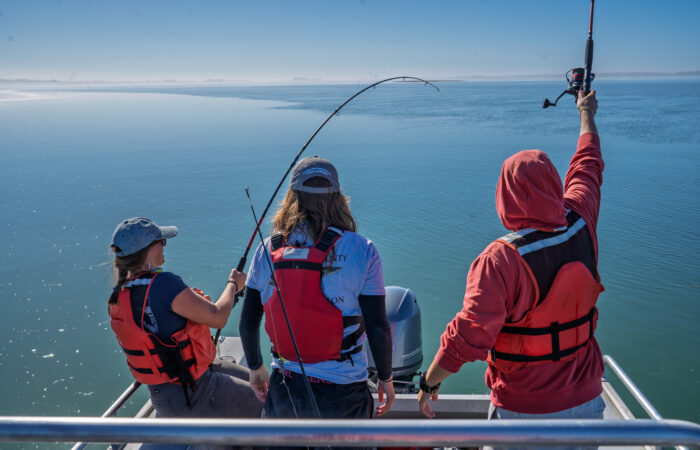
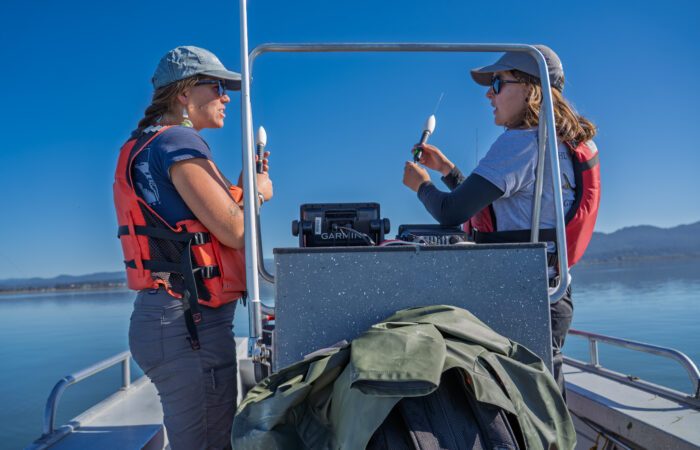
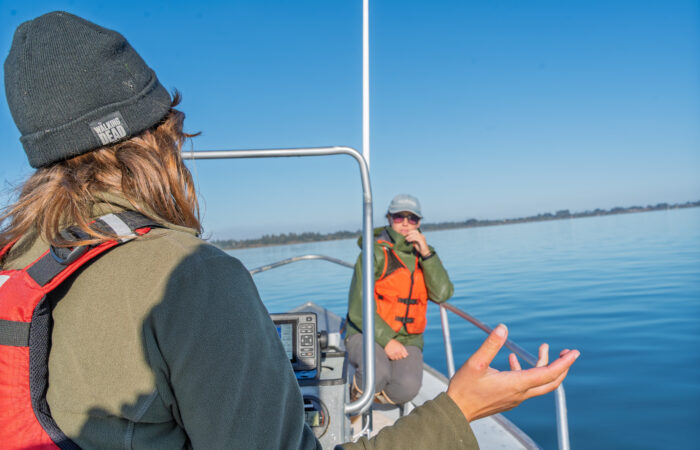
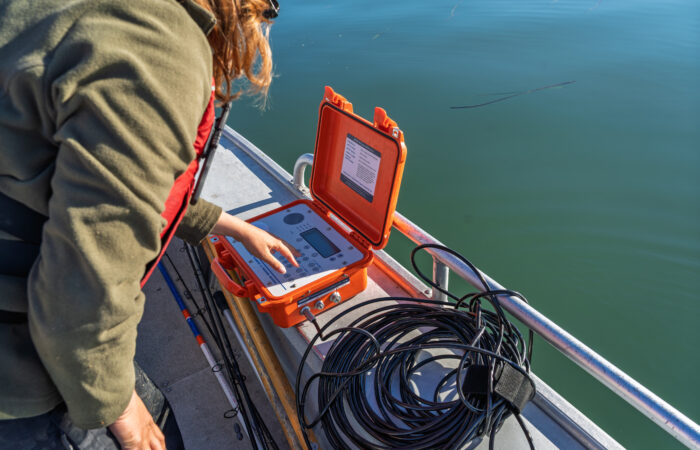
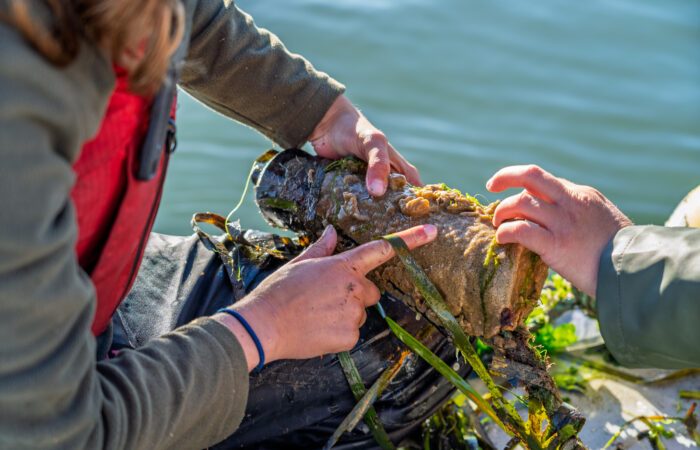
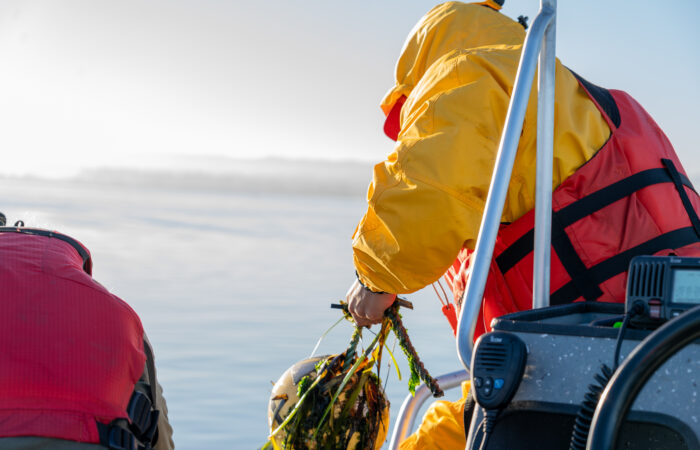
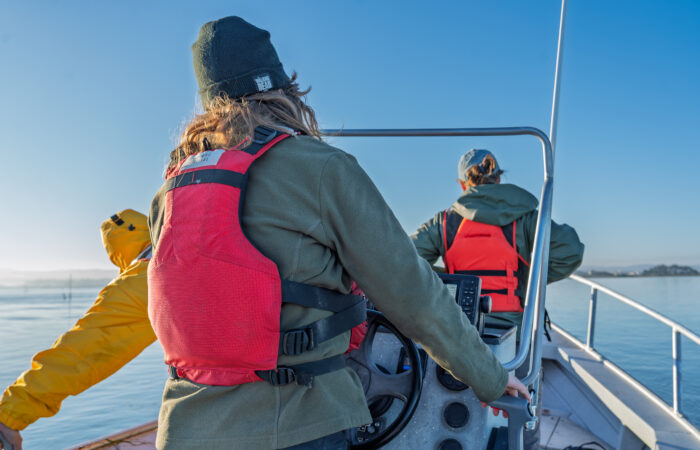
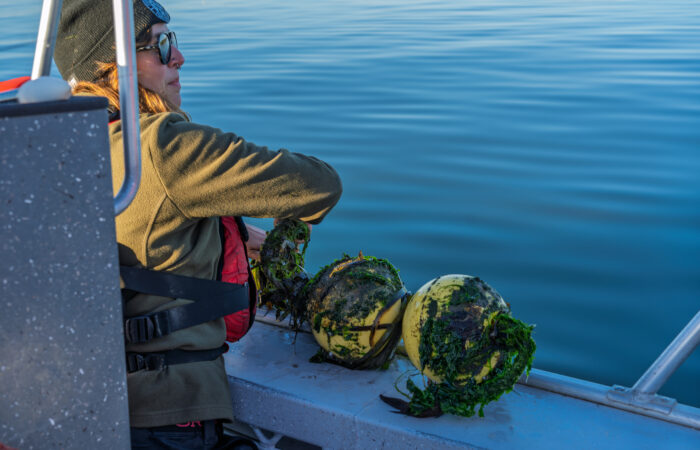
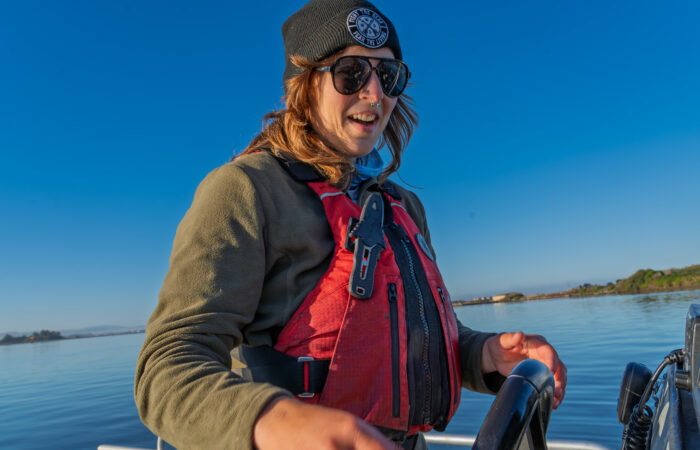
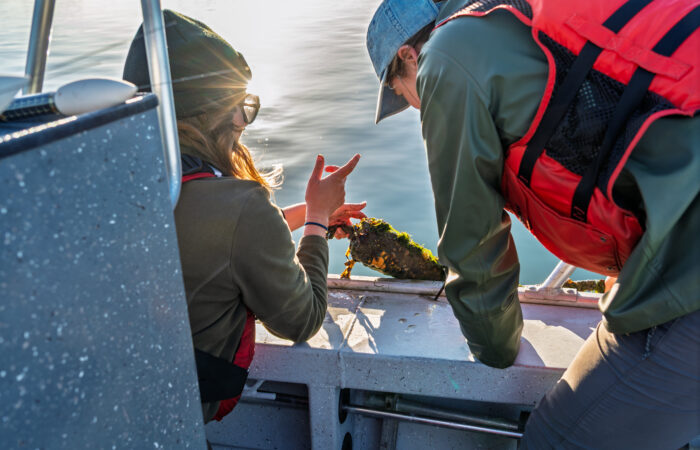
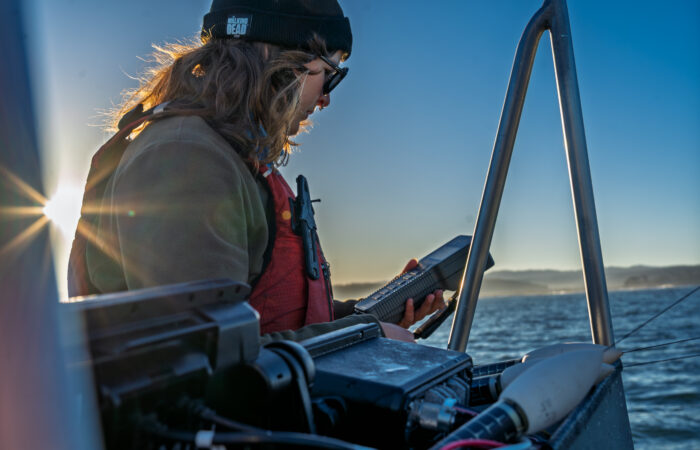
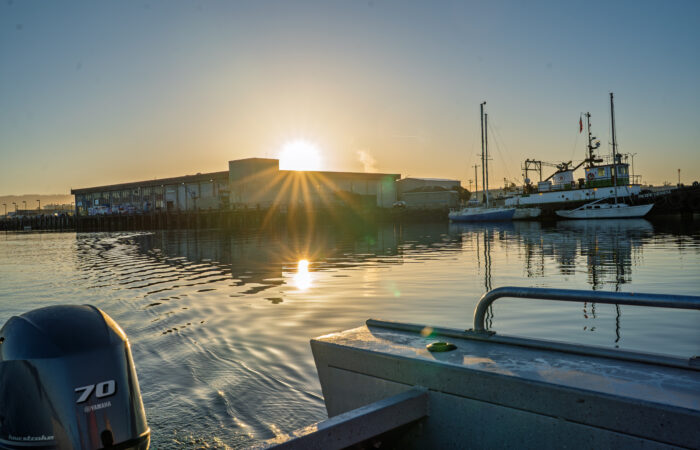
On 10/21, Olivia Boeberitz met with Michelle Kunst, Marine Natural Resources Manager of the Pulikla Tribe and Tyler Jones, Natural Resources Coordinator of the Pulikla Tribe at the public dock in Eureka, and prepared for a day of sturgeon sampling on a Cal Poly Humboldt Fisheries boat. Olivia took the group around the bay, checking acoustic receivers scanning for acoustically tagged fish and observing a few jumping sturgeons throughout the process. After checking all of the acoustic gear, the group attempted some hook and line angling, with success in catching a bat ray, but unfortunately, no sturgeon was caught that day.
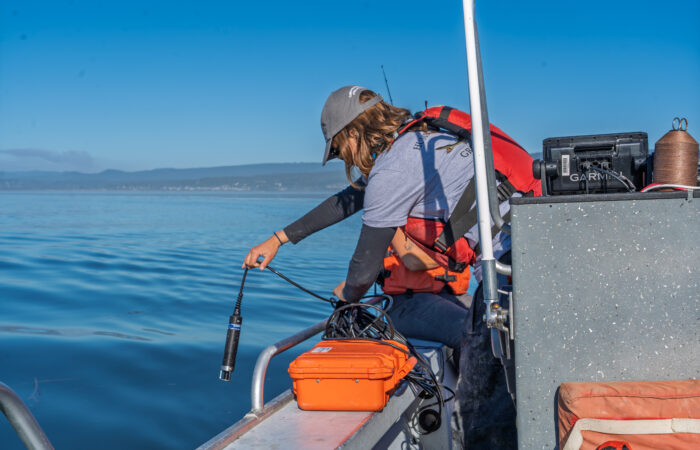
Olivia’s primary method of data collection for her research is acoustic telemetry. From May to December, acoustic receivers were strategically deployed throughout Humboldt Bay, the Mad River, and the Eel River to detect previously tagged green sturgeon. Acoustic telemetry data will provide information on the time of year sturgeon are present, movement and habitat use patterns, and the identification of the fish’s origin. Green sturgeon like to jump, so another method of research for this project is weekly visual surveys, including drone surveys. These were conducted at sixteen sites across North and South Humboldt Bay, the Mad River estuary, and the Eel River. Hook and line angling was conducted in the summer and fall to capture adult green sturgeon for the deployment of pop-up satellite archival tags, as well as recording length and taking fin clips for genetic analysis to determine DPS of origin. Environmental data was recorded simultaneously with all of these methods, taking measurements of salinity, water temperature, dissolved oxygen, tidal stage, and other relevant observational data to analyze trends in green sturgeon presence and activity.
“Sturgeon are often referred to as “living fossils,” with a fossil record that predates the T. rex by about 200 million years. Green sturgeon, in particular, hold important cultural, sustenance, and ecological value for Northern California Tribes. These amazing, ancient species are highly valued but vulnerable to many anthropogenic impacts we’re currently experiencing, including habitat loss, coastal development, barriers to migration, and climate change. Yet here in Northern California, green sturgeon remain relatively understudied, and much is still unknown about their presence, movement, and habitat use in our systems. Establishing regional monitoring capacity is therefore essential to better understand them, so we can be better stewards of both the fish and their environments. It has been an honor to witness and support the Blue Lake Rancheria’s devotion to the stewardship and protection of native fishes like sturgeon and their habitats. These incredible, prehistoric fish are deeply connected to this ecosystem and its people, and there is still so much we can learn from them — and for them.” – Olivia Boeberitz
This research project provides a real opportunity for the community to engage and to do some monitoring over the long-term. If you see any sturgeon deceased, swimming, or jumping in Humboldt County, this project is seeking to establish a network of green sturgeon observations. If you see them, let us know! Report your observations on the Humboldt County Green Sturgeon iNaturalist project: https://www.inaturalist.org/projects/humboldt-county-green-sturgeon or send an email to greensturgeon@humboldt.edu with a date, description, and location.
Originally Published: 11/21/2025