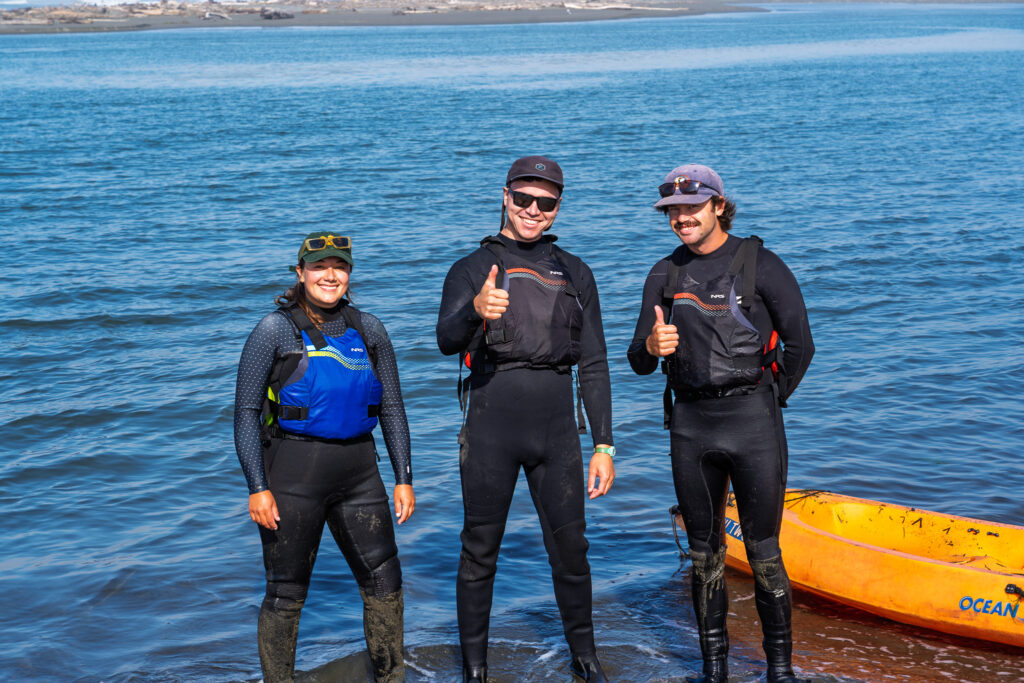
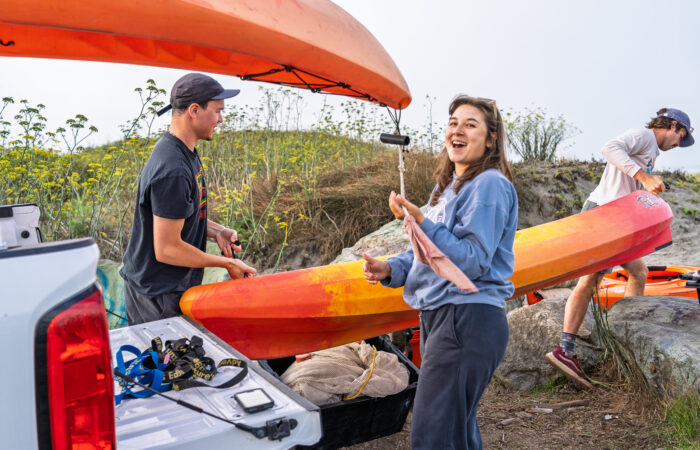
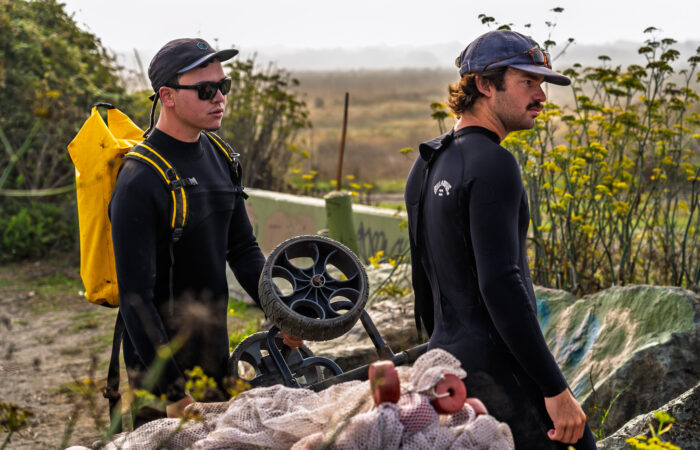
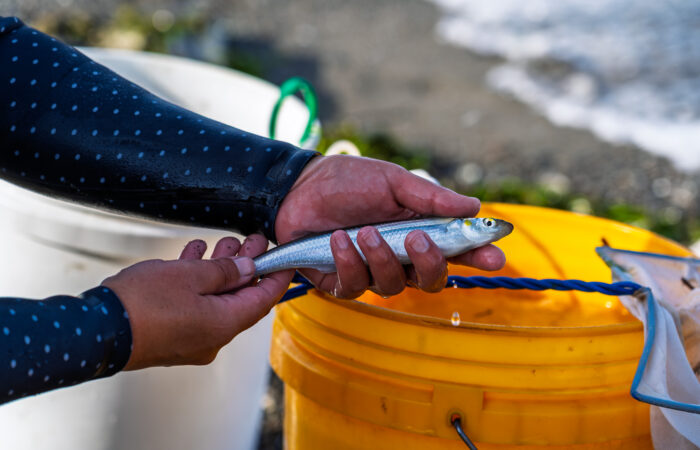
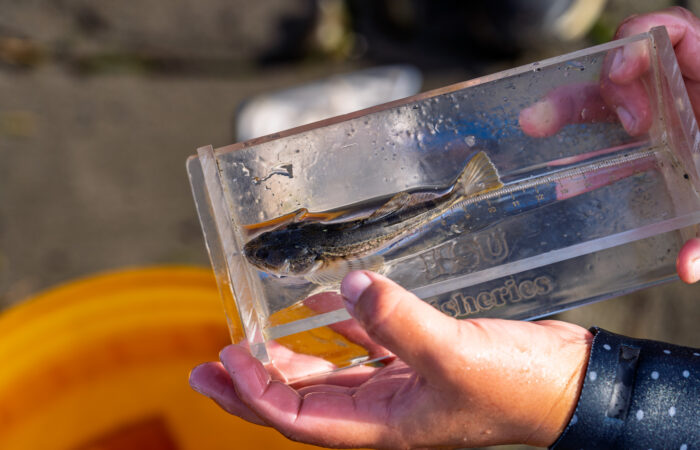
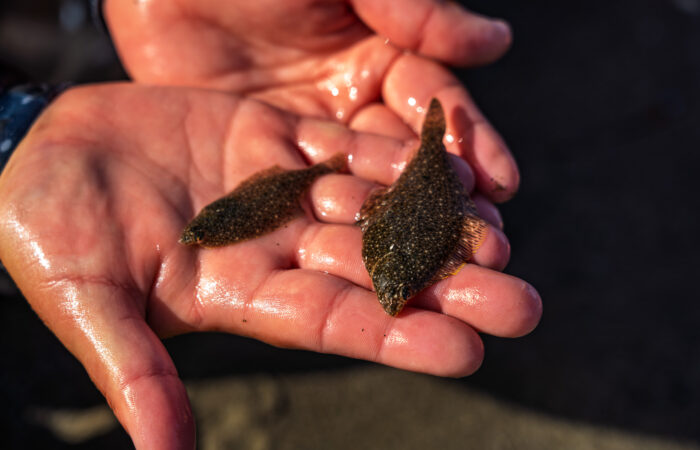
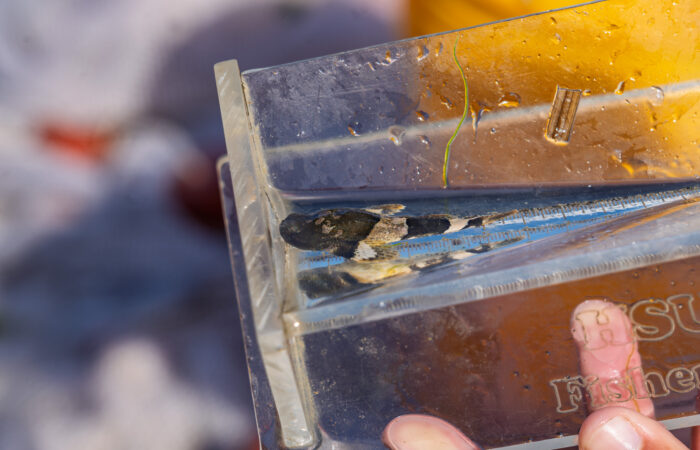
Rachel Hein is a Cal Poly Humboldt Fisheries graduate student who is partnered with and supported by the Blue Lake Rancheria Tribal Environmental Protection Agency through the North Coast Tribal Fisheries Collaborative. Rachel’s current project involves investigating how juvenile salmonids are using the Eel River Estuary on their outmigration period. Estuaries serve a vital role as nurseries for many fish and invertebrate species, including Chinook Salmon. Over time, the Eel River Estuary has seen heavy modifications which have resulted in significant changes to important rearing habits for salmonoids. Currently, the extent to which juvenile Chinook Salmon use the Eel River Estuary is largely unknown.
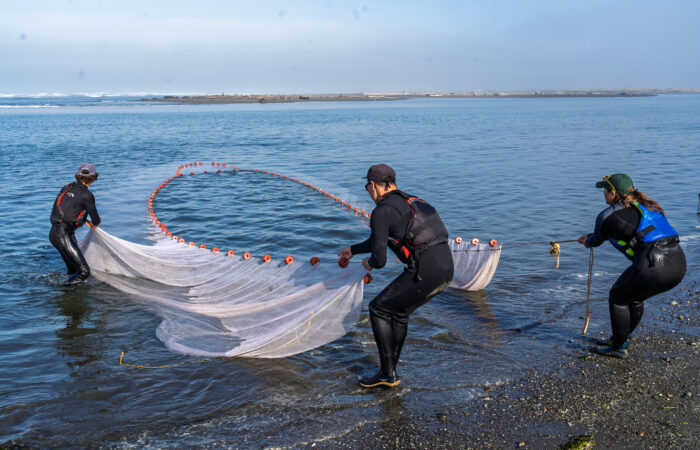
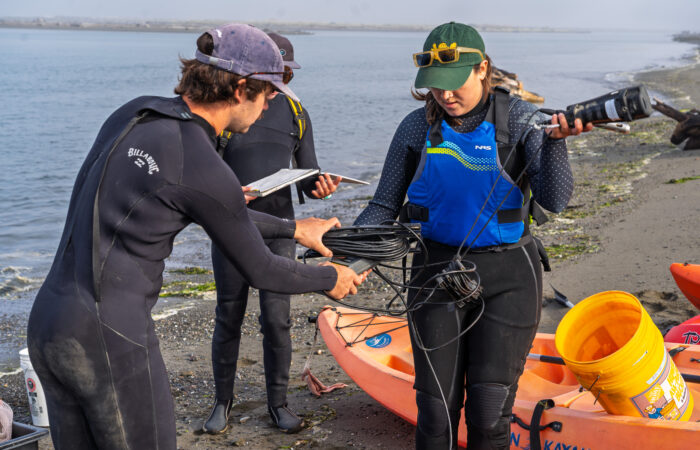
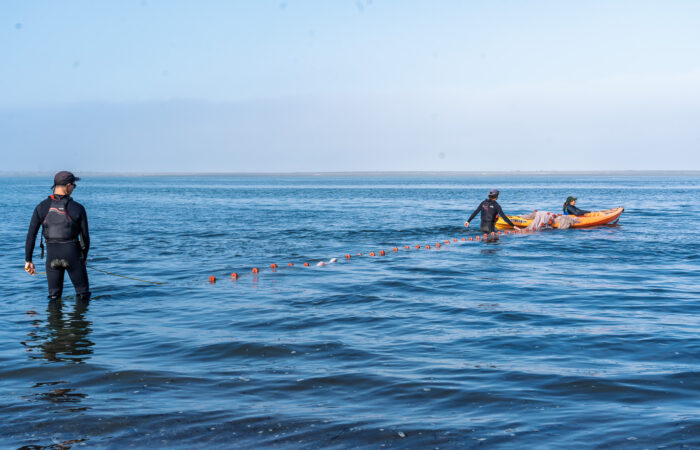
From February through September, Rachel and her team were sampling for juvenile Chinook Salmon from eight different areas representing different habitat types. Community data was collected using beach seines, with the team taking measurements and notes of the different species that were found. Habitat and environmental characteristics were also observed during each sampling expedition, with the team taking measurements of salinity, temperature, and dissolved oxygen. This study aims to determine how habitats are used by juvenile Chinook Salmon within the Eel River Estuary in order to effectively guide conservation efforts. To learn more about the Tribal Fisheries Resilience Project, visit: https://www.humboldt.edu/Tribal-fisheries-resilience
“Salmon are an important subsistence, cultural, economic species to many Northern California Tribes and I hope this work will inform adaptive management and enhance the capacity to support stewardship and management of Tribal and state natural resources. The objectives of this study are to identify seasonal and spatial patterns in the occupancy of juvenile Chinook Salmon, use size spectrum analysis to infer ecological characteristics of different habitats, and explore how productivity, predation risk, habitat, and environmental characteristics influence Chinook Salmon distribution patterns. Findings from this study will provide insights into the effectiveness of recent and future habitat restoration efforts to support juvenile Chinook Salmon in the Eel River Estuary.” –Rachel Hein
“This partnership highlights how Tribal and university collaboration can advance our understanding of complex ecosystems while supporting the next generation of environmental scientists. Studies like Rachel’s directly inform restoration and stewardship of salmon habitats that are central to Tribal culture, sovereignty, and regional resilience. Rachel is doing a fantastic job!” — Dr. William Matsubu, Environmental Director, Blue Lake Rancheria
Originally Published: 10/7/2025