

Office of Emergency Services
Brittaney Lewis
OES Director
Jose Hernandez
OES Coordinator
Makayla Weinmann
TERT Program Coordinator

Welcome to the Blue Lake Rancheria Office of Emergency Services
Preparedness is a shared responsibility; there is a role for everyone in preparedness efforts. By working together as a community, everyone can help increase safety and resilience when hazards strike – natural disasters, acts of terrorism, pandemics – and successfully reduce their impacts.
If you are having an emergency, Call 911.
Be sure to communicate:
- The nature of the emergency
- The location of the emergency
- A description of the emergency

Sign Up for Local Emergency Alerts
Get Prepared



About Us
The Wiyot People in the ancestral Mad River Valley (where the Blue Lake Rancheria is today) lived in unpredictable floodplains within a seismically active watershed for many thousands of years. These ancestors were always engaged in natural hazard mitigation. Today, we build on those ancient practices, and in both ancestral and modern cases, the primary goal remains the same: to reduce or eliminate loss of life and property and environmental damage resulting from disasters.
The Blue Lake Rancheria Office of Emergency Services (BLROES) was created in 2010 in response identified capability gaps and ongoing emergency preparedness needs. BLROES leads emergency preparedness and disaster mitigation, response, and recovery across a wide array of planning, training, exercise, and certification efforts. The rural, geographically isolated North Coast region of California has specific hazards such as large earthquakes from the Cascadia Subduction Zone, tsunamis, severe storms, wildfire, drought, floods, and landslides, among many others. Impacts from these hazards include air quality reductions, and lengthy resource disruptions (e.g., fuels, electricity) that can last from hours, to weeks, to months.
BLROES works with a wide array of partners – emergency planners and responders at the local, regional, state, and federal levels – to lessen the severity of these impacts and secure adequate resources to continually improve resilience within the Tribal community and across the region. These partnerships work to achieve greater levels of preparedness for all North Coast residents.
BLROES created the Resiliency Training Innovation Center (RTIC) in order to provide training resources to the community, and frequently hosts emergency management trainings
How to be ready for a Disaster
Before
During
After
- Make a plan for yourself and your family
- Build an Emergency Kit
- Review different types of emergencies that can happen in your area
- Be informed, stay informed. Sign up for local emergency alert systems
- Learn about your school and work’s emergency plans
- Look for instructions and updates from local authorities on:
- Television
- Radio
- Internet
- Social Media
- Different types of emergencies require different types of responses. View our disaster-specific resources below!
- Document any damages to property for insurance claims
- Check the area around you for safety. Listen for instructions on local radio or television stations
- Some natural hazards may recur over the next several days. Severe storms can be followed by new storms, and earthquakes can have aftershocks.
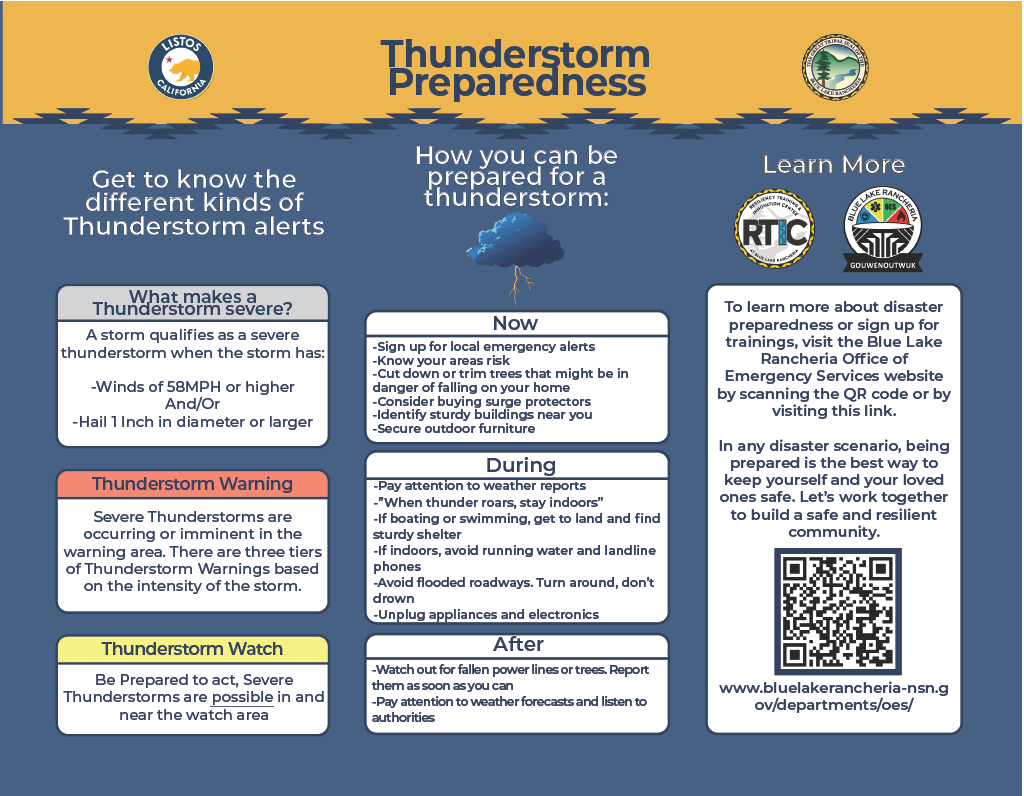
Disaster Preparedness Resources
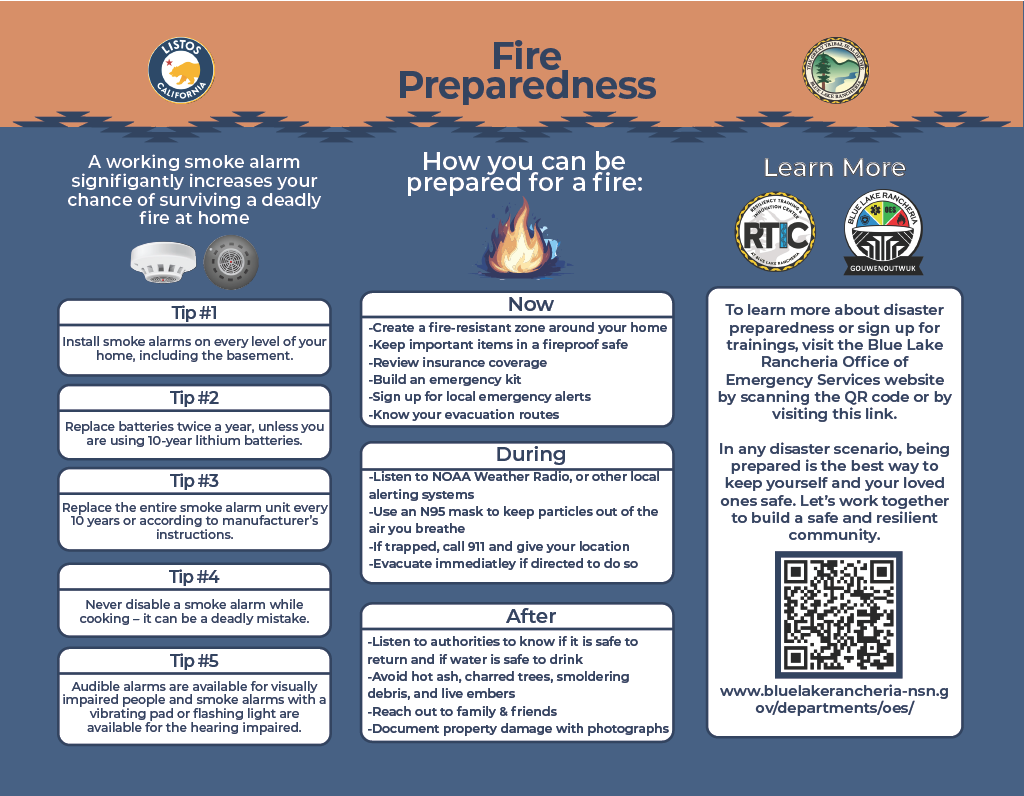
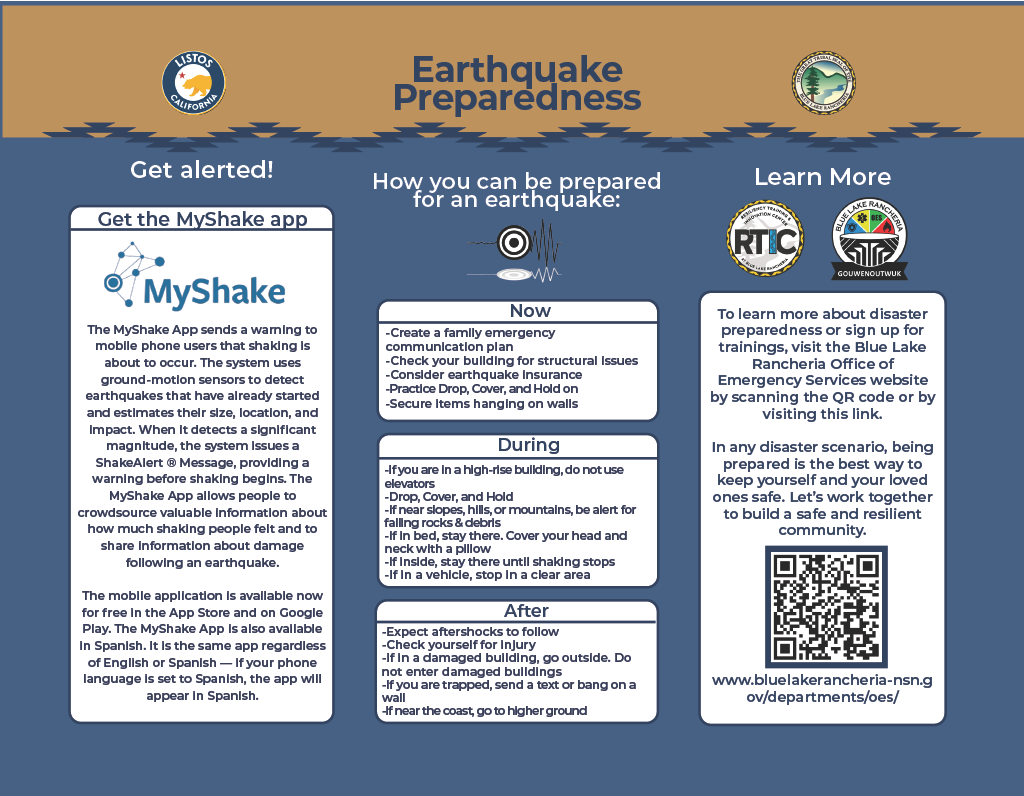
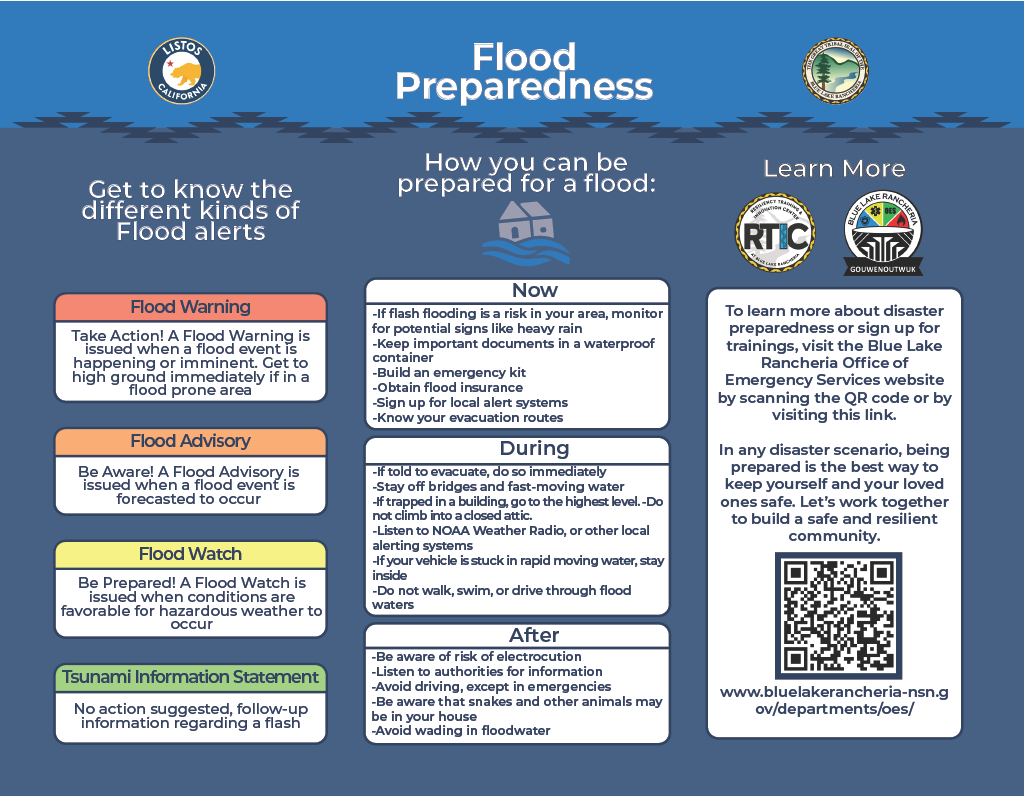
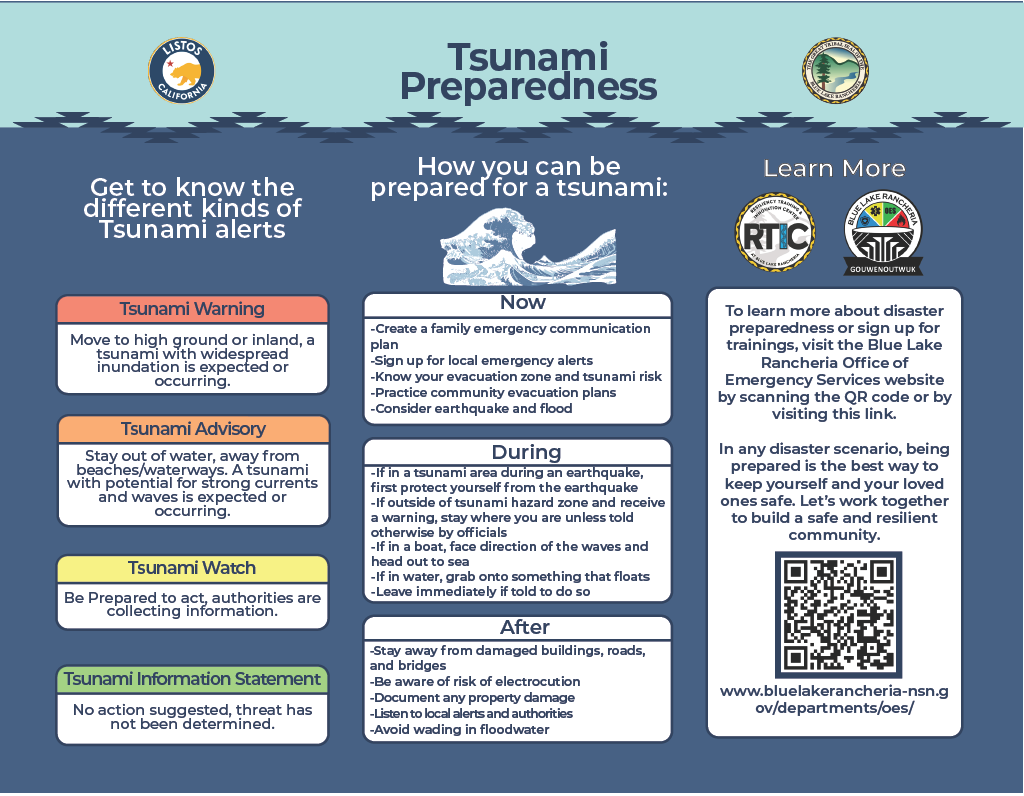
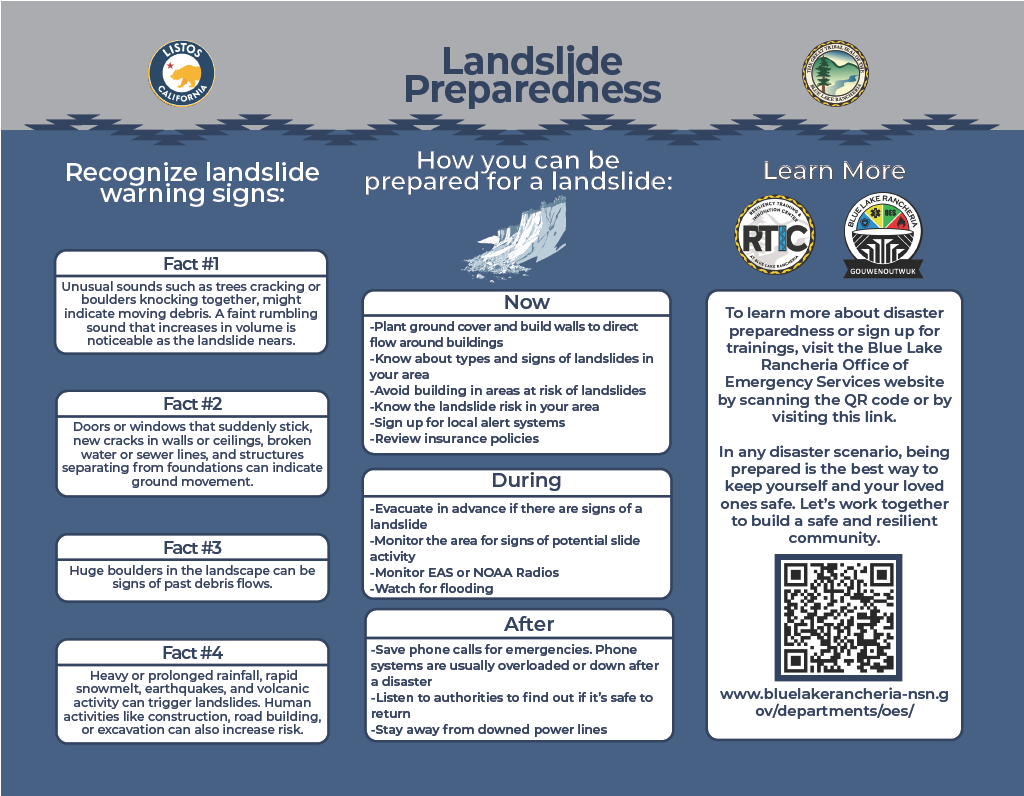
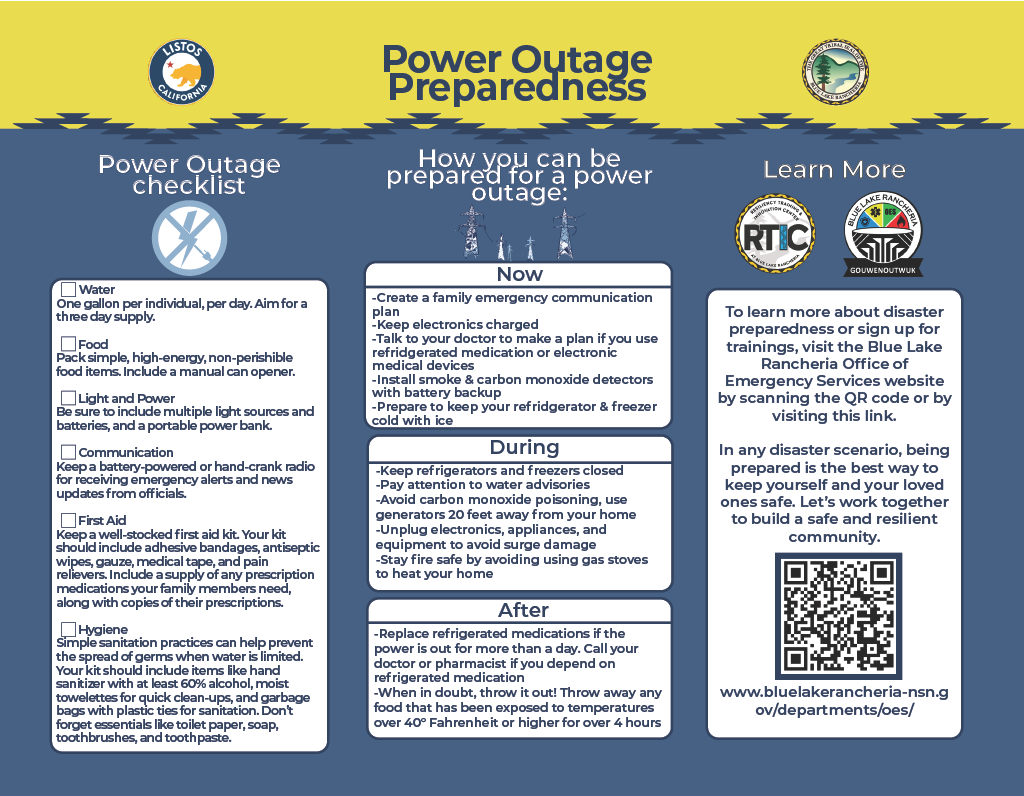
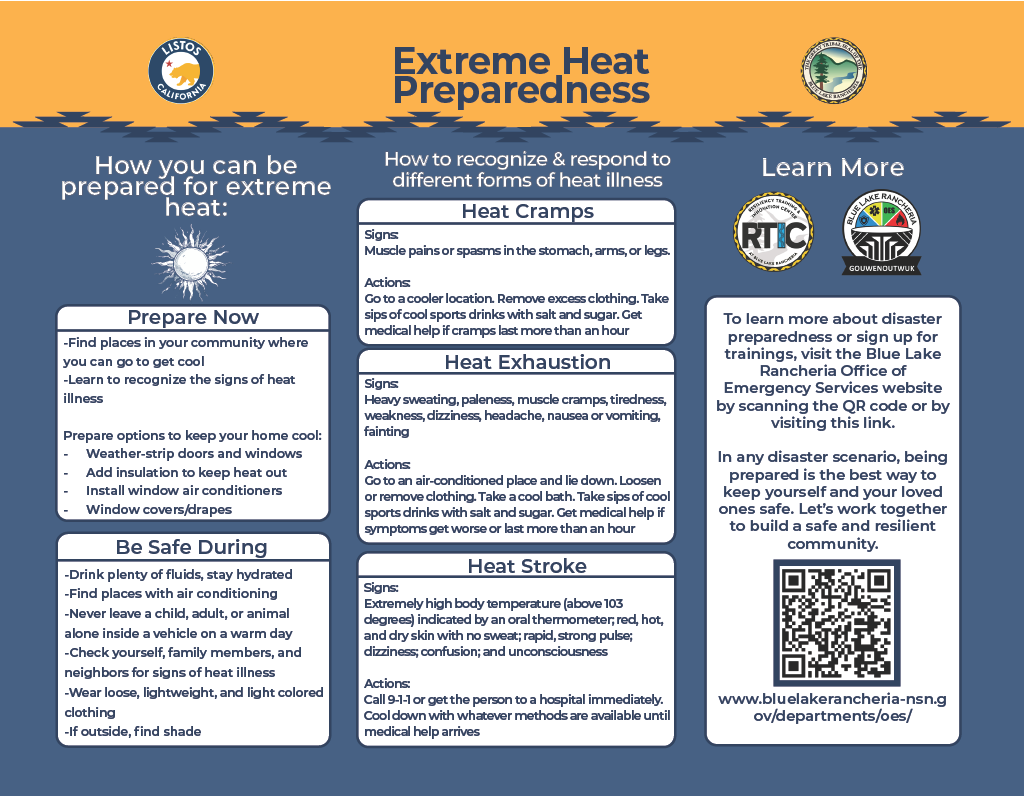
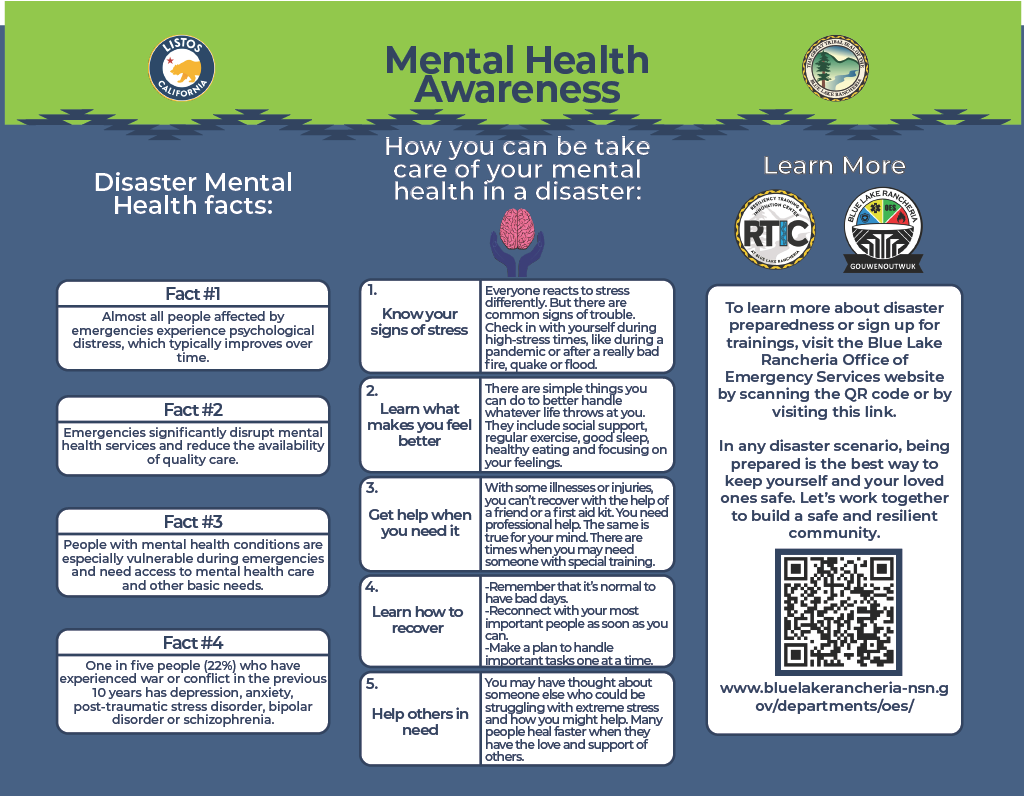
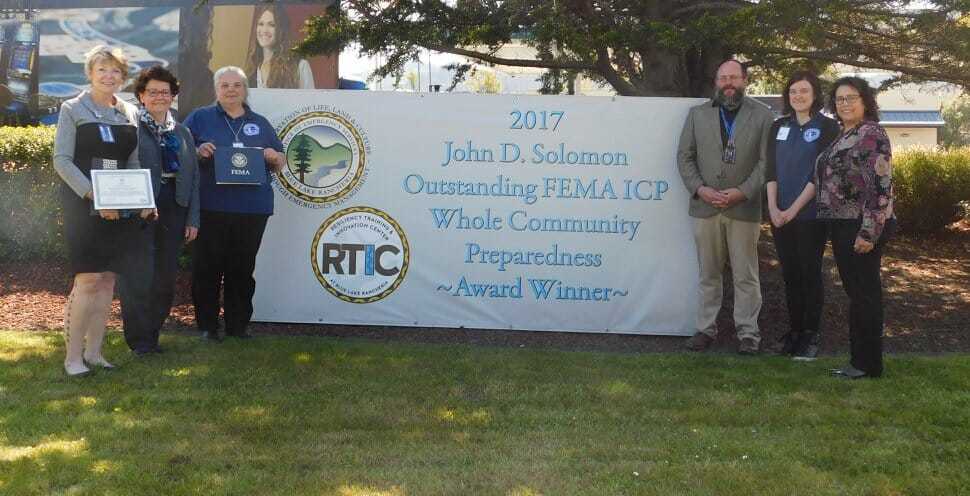
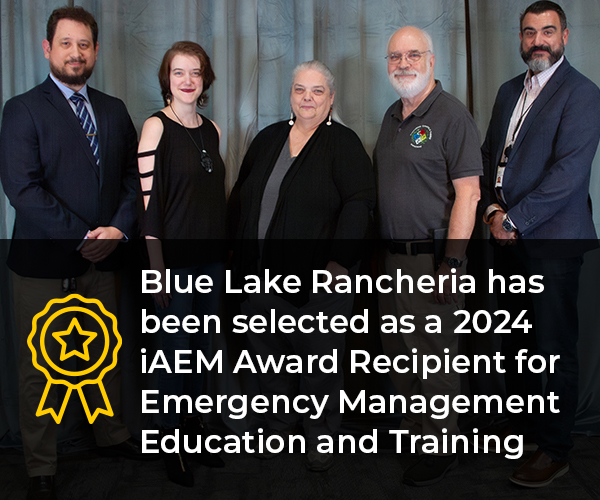
Recognition
BLR Mitigation Plan
Hazard mitigation is described in FEMA’s 2017 Tribal Mitigation Plan Review Guide as the process used by Tribal, state, and local government leaders to understand risks from natural hazards and to develop long-term strategies to reduce the impacts of future events on people, property, and the environment.
The effects of natural and human-caused hazards impact the safety and well-being of Blue Lake Rancheria residents and patrons, both directly and indirectly. While most hazards cannot be eliminated, their effects can often be mitigated. The Tribe, working in conjunction with the planning group updated this Tribal Multi-Hazard Mitigation Plan (TMHMP) to guide and focus hazard mitigation activities. This plan profiles significant hazards to the community and identifies mitigation goals and actions.
The purpose of this plan is to promote understanding of hazards and develop sound public policy to protect Tribal members, guests, critical facilities, infrastructure, private property, and the environment from natural, technological, and human-caused hazards. The plan includes resources and information to assist Tribal residents, patrons, organizations, local government, and others interested in participating in hazard mitigation planning.
For this plan update, the Blue Lake Rancheria opted to include human-caused incidents, including technological factors.
Since 2003 the Blue Lake Rancheria has been impacted or threatened by more than 40 natural disasters, human-caused or technological emergencies, and combinations of both. The Rancheria occupies both Tribal trust and nontrust lands at risk of riverine flooding, upstream dam failure and inundation, seismic events, extreme weather, and other hazards.
The purpose of hazard mitigation is to protect our people and help them avoid damage to their homes, possessions, property, culture, and environment by providing a strategy to reduce or eliminate long-term risk from known and likely hazards. A multi-hazard strategy addresses the relationships among various types of hazards, leverages resources to address multiple hazards, and allocates limited resources to areas susceptible to the most severe or frequent hazards.
This Tribal Multi-Hazard Mitigation Plan (TMHMP) was prepared on behalf of the Blue Lake Rancheria (BLR or Rancheria) by BLR staff and shared responsibility stakeholders such as government agencies and community members. The Tribe followed a planning process prescribed by FEMA, which began with the re-formation of the Community Planning Committee (planning group) comprised of key Tribal representatives and other stakeholders. The planning group conducted a Hazard Vulnerability Analysis identifying and assessing the Rancheria’s vulnerability to hazards and examined the capabilities in place to mitigate them.